Showing posts with label Fox Movietone Follies of 1930. Show all posts

29 November 2006

Ace of Spades

If it's a remarkable feat for a musical number in an early sound film to "stop the show," then what are the chances of someone achieving the nearly impossible: stopping the show within a showstopping musical number?

Yet, that's precisely what happens during the "Turn On The Heat" production number sequence in the 1929 Fox film "Sunny Side Up" when unexpectedly, the camera cuts away from the manic jazz frenzy led by Sharon Lynn --- to focus on two of the film's auxiliary performers, Marjorie White and Frank Richardson. The pair, posing as party servants, have been standing on the sidelines watching. Richardson merely says "Listen to this," (not so much to his partner as to the film audience) and then lets loose with a rooster's crow of a vocalization that cuts through seventy-plus years of film grain, murk, damage and hiss like a machete. You almost don't want the moment to end --- it's that good, and that pure and so exhilarating --- and then you're kept waiting throughout the rest of the film to see if Richardson is given another such moment, but it never comes.

Well, actually it does -- but only as part of the "Sunny Side Up" end-credit exit music tag. Richardson isn't seen, he's just heard --- and he's not quite the strutting chanticleer here because this tune doesn't call for it, but in retrospect, Fox couldn't have left audiences who'd just seen the film with a better departing musical souvenir.

"Sunny Side Up" (1929) Exit Music Tag


Here, to the right, is an early glimpse of Frank Richardson's career on the move. It's 1923, and Richardson --- at twenty-five, has already had a career that's filled seventeen of those years. Born in Philadelphia, he'd later say he wanted to go on the stage almost as soon as he could walk and talk. Maybe so, but it wasn't until he learned to sing and developed himself into something of a boy soprano that he'd get his chance to step on a stage and exhibit the same strong presence he'd always possess. Someone took quick note, and before long the eight year old Richardson signed an engagement with Dumont's Minstrels, appearing as "The Wonder Boy Tenor."

Richardson would later join Emmet Welch's Minstrels at Atlantic City, New Jersey's Million Dollar Pier venue and then break out on his own, first with circus shows and then as master of ceremonies and entertainer in vaudeville and motion picture houses across the country.

When we next look in on Frank Richardson, in 1925, he was about to cut what he thought would be his last ties with his minstrel show lineage. Usually booking himself as "The Joy Boy of Song," he still relied heavily upon minstrel material and performance style in his act--- so much so that he sometimes billed himself as "The Ace of Spades," whenever he thought this title would have greater appeal.

By late 1926 though, his "Ace of Spades" persona was ready to be buried once and for all. According to a publicity placement likely composed and distributed by Richardson himself to newspapers in towns he was booked into: "Frank Richardson, the Joy Boy of Song, is no longer a blackface comedian. He will sing his songs 'natural,' which is the vaudeville slang for whiteface. One day Mr. Richardson, because of a delayed railroad schedule, reached a theatre where he was to play too late to make up. He went on in street clothes without the customary burnt cork. His act went better than it had ever gone before. Then and there he ceased to be a blackface comedian. In calling himself the Joy Boy of Song, Mr. Richardson merely announces that he is a singing comedian of a different type with individuality."

Richardson's "Ace of Spades" persona might have been buried then and there, but he little suspected it would come calling again, in less than four years time, and that he'd be donning the customary burnt cork for an entertainment medium that would present him to more people in more audiences in just a few weeks than he had ever played before in half a lifetime of show business.


By 1927 he'd be called before the Vitaphone cameras for a short subject titled "The Joy Boy of Song," that would be booked into theaters throughout most of 1928, so it must have seemed but a moment to the always busy performer before he was summoned to California, to Fox Studios and he'd spend a whirlwind-like two years in some of the most popular and highest earning musical films of the day.


Unfortunately, we currently have no way of knowing what Frank Richardson's debut performance in "Fox Movietone Follies of 1929" looked or sounded like, but he couldn't have been given a better tune, the cheeky "Walking With Susie," just right for the strutting, cocksure Richardson's barrel-chested ringing voice and demeanor.

In "Sunny Side Up," he's given more to say than he's given to sing --- but he pulls it off, and in a role (that of a braggart ham) that could just as easily prompt audience dislike as much as acceptance, he wins the day --- largely because he's an endearing, gentle sort of braggart ham who, the viewer feels sure, probably believes less in his boasts than anyone else. Interestingly, it's the secondary roles in "Sunny Side Up," enacted by Richardson, White and Lynn that linger long after Gaynor & Farrell's sticky affectation wears off. As for El Brendel, well.... that's something else entirely!


The fact remains that "Sunny Side Up," was and is a remarkable film that impressed audiences so upon its original release that it was only one of very, very few early sound films that would be revived, most of them musicals incidentally --- by popular demand --- well after its premiere, in this case well into the last months of 1933.


Richardson's first two successes proved a hard act to follow, although he'd briefly have a chance to shine again in Fox's minstrel-themed "Happy Days," where he's billed and presented as himself, singing the infinitely catchy tune "Mona." How Richardson and his highly recognizable voice eluded the phonograph companies is any one's guess, so while we don't have a 78rpm commercial recording of his performance, I offer the two next best things. First, an extract of Richardson's performance from the film "Happy Days" itself, and then George Olsen's equally fine commercial rendition of the same tune, released late in 1929 on Victor Records with Fran Frey providing the warbling in lieu of Richardson.

"Mona" (1930) Frank Richardson

"Mona" (1930) George Olsen & His Music


Following "Happy Days," Richardson would still have one more film appearance to put in before he could finally cast off and bury his "Ace of Spades" persona, although after he did just that, following end of work on "New Movietone Follies of 1930," his film career would evaporate along with it --- an irony that couldn't have escaped him entirely.


Still, for his farewell film, Richardson is given what amounts to a reprise of his role in "Sunny Side Up," and considering he's again partnered with Marjorie White, their work together in the film almost plays like a continuation of the earlier film, presuming they left their pals Gaynor and Farrell alone to gaze into one anothers eyes undisturbed while White and Richardson got on with their lives and struck out in show business. Released and/or previewed in some areas under the ghastly title "Svenson's Wild Party," "New Movietone Follies of 1930" is a weak film only when compared to what we know of its earlier 1929 incarnation. As it stands --- on its own, it's fast, slick, polished, risque, funny, tuneful and filled with ingenuity in direction and photography of the sort that makes its current senseless imprisonment in vaults all the more lamentable.

In this audio excerpt, Frank Richardson bids noble farewell to the screen musical via his crack-the-roof-plaster rendition of "Here Comes Emily Brown," and exits as proudly and as confident as he entered --- leaving off with a high note in which traces of Boy Tenor and Minstrel Man are still very much in evidence, and resonate even now.

Afterward: Richardson returned to vaudeville, where he can be found appearing as a performer or master of ceremonies up through the mid-1930's. In 1934 he'd be named in a breach of promise lawsuit for $100,000.00 by lover Joan Williams, when she discovered he was already --- and had long been, married to Adele Richardson. Happily, in a case that was already starting to set reporters and gossip columnists drooling, Adele Richardson simply stepped out of the picture --- leaving a clear field for Joan Williams who, rather surprisingly, eagerly dropped her lawsuit and married Richardson almost immediately.

Thereafter,throughout the 1940's and 1950's, there's precious little mention of Richardson. He could have chosen to retire, or he could have worked sporadically --- perhaps even contributing his talents to wartime entertainment requirements. I simply don't know.

In February of 1962, on a page filled with movie ads a world away from his own films --- with titles like "Wild For Kicks" and "The Day the Sky Exploded," there could be found this simple, two sentence obituary for the entertainer, who died in the city of his birth of a heart attack.


###


15 November 2006

A Fancy Lady and the Winnipeg Kid

One of the most endearing figures to romp across the screen between 1929 and 1930 was actress, comedienne, dancer and singer Marjorie White. Offering able support and more than holding her own against the likes of Janet Gaynor & Charles Farrell, The Three Stooges, Wheeler & Woolsey and even "Charlie Chan" and Will Rogers, she lit up the screen with a manic energy and distinct personality of the rare sort that didn't lose audience favor as quickly as it would with Winnie Lightner or even White's frequent co-star, El Brendel.

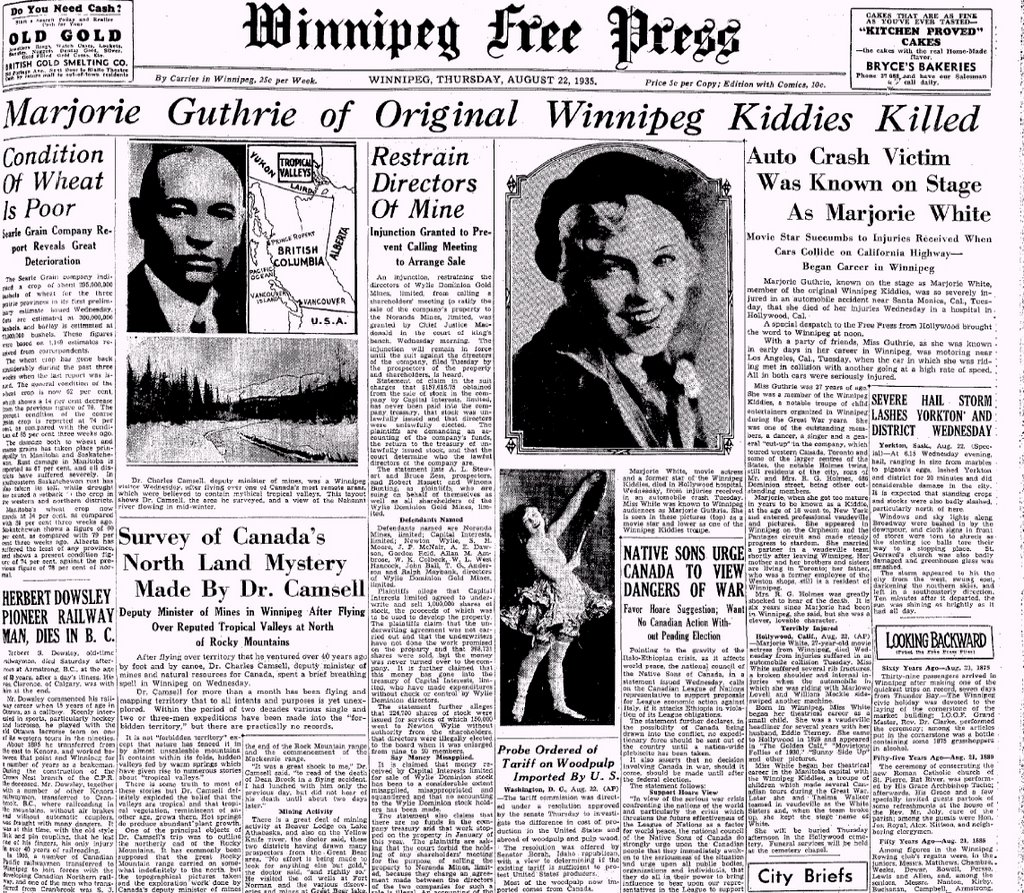
A mere twenty-seven years old at the time of her death --- an auto accident near Santa Monica, California --- Marjorie White began her career as Marjorie Guthrie during the First World War as a member of the "Winnipeg Kiddies," a performing troupe comprised of youngsters that toured Canadian and American cities. After outgrowing the "kiddie" designation (although only 4'10" tall), the combination of marriage, a name change and an arrival in New York City resulted in the start of a career that would remain active until her demise. Vaudeville tours on the Orpheum and Pantages circuits with Thelma White (where they appeared as the "White Sisters") would eventually lead to Marjorie answering the call to Hollywood in where she appeared in six films for Fox between 1929 and 1930 alone, four of them musicals.

Although a key figure in "Happy Days" (Fox-1930) --- with the film's minstrel show/revue portions being hung upon a thread of a plot led by Marjorie White, it's "New Movietone Follies of 1930" that allows for the one and only spotlight performance in her film appearances. One of many elaborate musical sequences in the film, "Talking Picture Queen" presents White as a young nobody arriving at the studio gates, eager to impress studio executives who pleads "How I long to be synchronized!"

Quickly advancing through the required course of voice and dance lessons, she emerges a full blown talkie diva at last --- only to be joined by a thundering herd of dancers who share her moment of glory. It all plays far better than described, and is one of those rare self-depreciating jabs at the movie industry, set to music, that remains timeless and as sharp as ever.


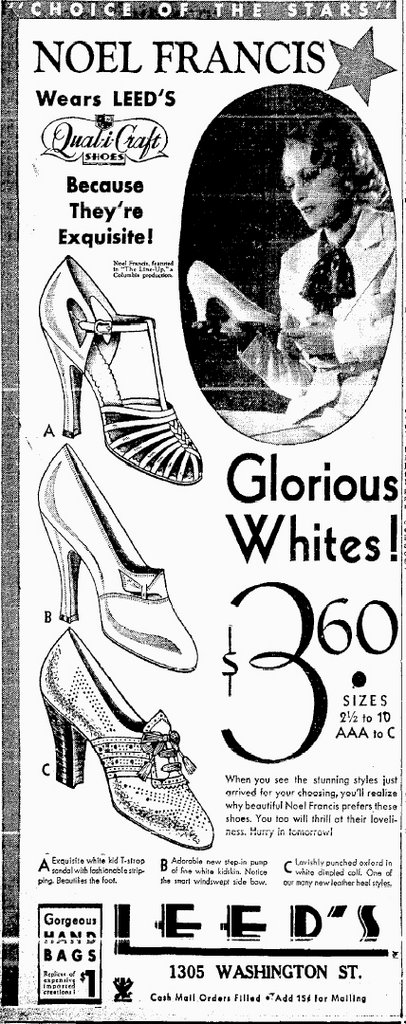
"New Movietone Follies" also served as a showcase for a fascinating yet shadowy actress, Noel Francis --- of whom I could find little personal detail aside from the oft-repeated fact that she hailed from Texas, was disowned by her father for choosing a performing career, and was a former Ziegfeld girl before entering films in 1929.


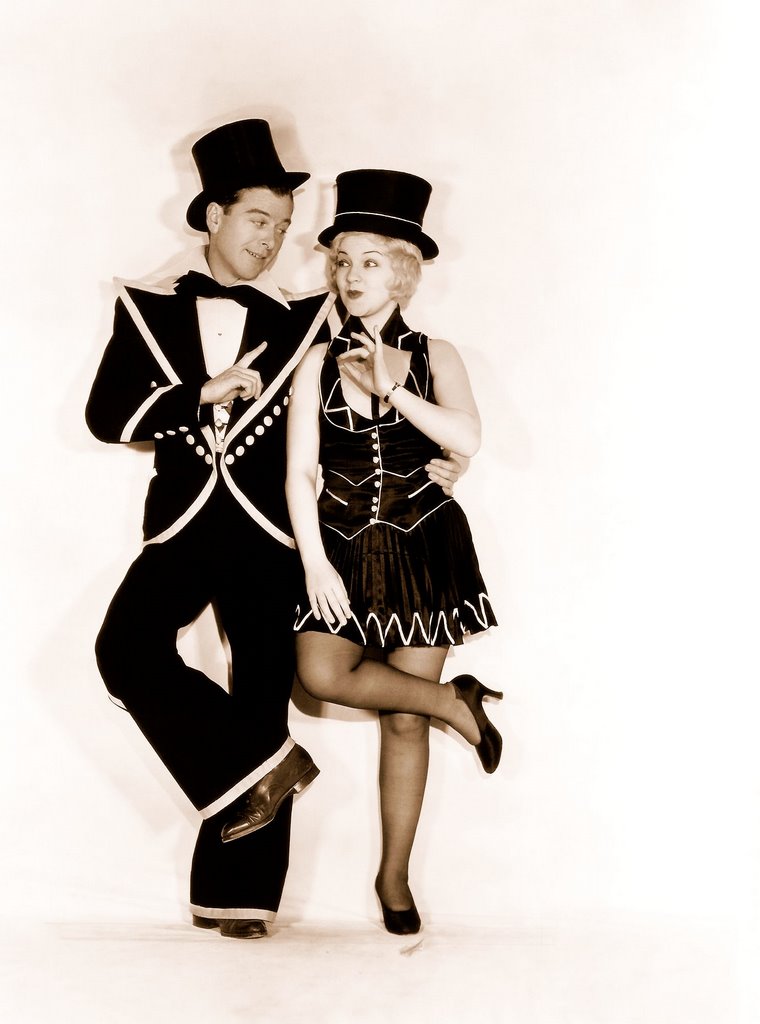
The image of Francis at the left, while hard to equate with the languid yet edgy actress seen throughout the 1930's was, interestingly, used as a publicity image for her appearance in 1931's "Blonde Crazy," despite it obviously dating back to a far earlier day. Possessing a surprisingly powerful singing voice that was given free reign in a rendition of "Cheer Up and Smile" in the 1930 Movietone revue, it was her distinct and beautifully melodic speaking voice that really stands out. Although her appearance, personality and mannerisms would vary quite a bit in her 1930's roles (she seems unquestionably ill in a small unbilled role in 1933's "Havana Widows," a remake of Winnie Lightner's 1930 "Life of the Party") the strangely appealing quality of her voice --- always somewhat halting with a note of repressed hysteria --- remained intact.

Of her later roles, she's especially memorable in a small cameo lasting but a moment in 1931's "So Big," where she's seen as a prostitute (billed as "A Fancy Lady") wearily roaming the nearly deserted night-time streets. Encountering an industrious young woman (Barbara Stanwyck) and her toddler son readying for bed in their wagon, Francis is utterly heart-breaking in her display of impossible yearning for the maternal relationship and life she knows will never be hers. Equally, while decidedly a minor villain in 1932's "Night Court," she's incredibly effective here too in a role that allows her to be victimized by Walter Houston and then, in an attempt to gain something out of the ordeal --- she attempts to have her way with a drunken Phillips Holmes, allowing her a priceless fade-out moment as the intended seduction fails miserably.


By 1935 steady work in increasingly smaller roles began to fall away, and by 1937 she left the screen as quietly as she entered it, but not without leaving many small but perfect, gem-like moments behind.


The history behind "Happy Days" is also tied into that of the Fox 70mm widescreen process named "Grandeur," --- a topic that forthcoming posts will eventually explore. For now at least, it should be noted that while "Happy Days" survives, it's commonly seen only via dreadfully poor quality video dubs, riddled with splices and missing a number of sequences. A number of years ago, a superb quality print was viewed at New York's Museum of Modern Art, indicating that it's still out there, perhaps waiting for the studio that created it to show the slightest interest in it once again. I wouldn't hold out hope, however.

"New Movietone Follies" also survives in a beautifully restored print that has been given a few isolated screenings here and there, but apparently no thought has been given to DVD release or cable airings in addition to its sporadic outings. It's the old, old story.

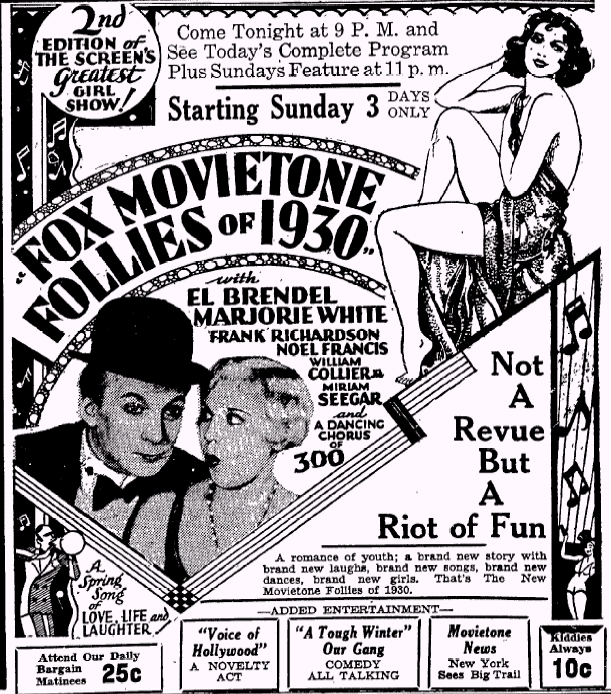
Note that in the above ad and in the one to the right, prospective patrons are being assured that neither film is a revue. An early indication of a tide that was slowly but surely turning!

From "Happy Days," an unnecessarily pretentious but enjoyable medley of tunes recorded by the New Mayfair Orchestra in 1930. Included, "I'm On A Diet of Love," "We'll Build A Little Home Of Our Own," "Mona" and "Crazy Feet."

Medley - "Happy Days" (1930)


Also from "Happy Days," perhaps the film's best tune, "Mona" performed here by Ben Selvin and his Orchestra. The vocal, by Irving Kaufman, doesn't do justice to Frank Richardson's soaring version as performed in the film --- but it comes close!

"Mona" (1930)


Two selections from "New Movietone Follies of 1930." The first is Noel Francis' solo number, "Cheer Up and Smile," which has similarities to a bit of business contained within Janet Gaynor's performance of "Sunny Side Up" in the well known 1929 film of the same name.

"Cheer Up and Smile" (1930)

Next up is a bit of romantic intrigue and melody. Swedish dialect comedian El Brendel is mistakenly thought to be a rich "lumber king" by White and Francis, his secret (he's a servant) is discovered by the latter, who then wants to rid herself of him as quickly as possible --- and feigns gallant self-sacrifice to unload him on an unsuspecting Marjorie White. This is followed by a comedic duet/wrestling match between Brendel and White titled "Bashful."

###